Your child’s first dental visit is an important milestone that helps establish healthy oral habits from an early age. Many parents assume they should wait until all of their child’s baby teeth have come in, but early dental care can help prevent problems before they start.
At Smileworld Family Dental, we enjoy helping children feel comfortable at the dentist while giving parents the guidance they need to support their child’s oral health. Scheduling your child’s first dental visit at the right time can lay the foundation for a lifetime of healthy smiles.
When Should Your Child First Visit the Dentist?
The American Academy of Pediatric Dentistry and the American Dental Association recommend scheduling your child’s first dental visit by their first birthday or within six months after their first tooth erupts.
Although baby teeth are temporary, they play an essential role in chewing, speech development, and guiding permanent teeth into their proper positions. Early dental visits allow your dentist to monitor healthy development and identify concerns before they become more serious.
Why Is an Early Dental Visit Important?
Many dental problems can begin long before children start school. Seeing a dentist early allows parents to learn how to care for their child’s teeth while helping children become familiar with the dental office.
Benefits of an early dental visit include:
- Monitoring healthy tooth development
- Detecting cavities at an early stage
- Evaluating bite and jaw development
- Providing guidance on brushing and flossing
- Discussing fluoride and cavity prevention
- Answering parents’ questions about oral health
Early preventive care often helps reduce the need for more extensive treatment later.
What Happens During Your Child’s First Dental Visit?
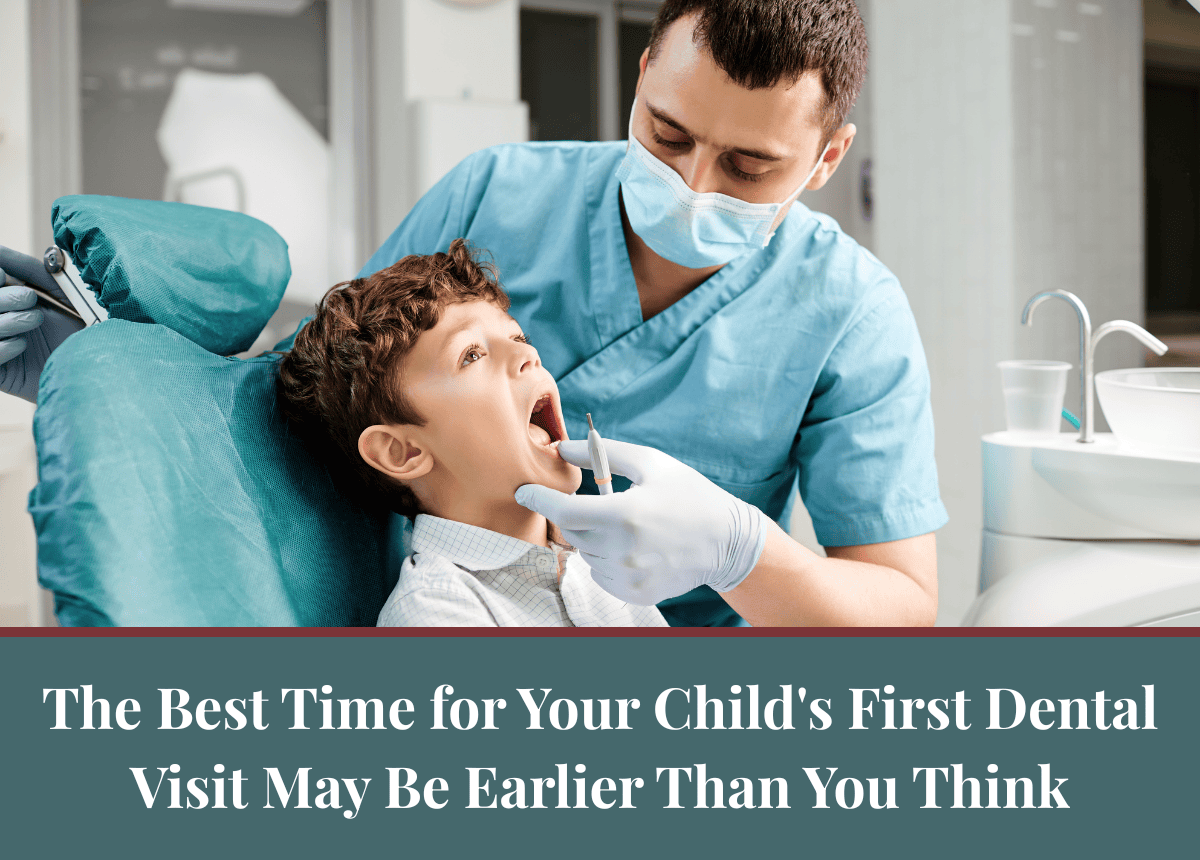
The first appointment is usually simple, gentle, and focused on helping your child feel comfortable.
Depending on your child’s age and needs, the visit may include:
A Gentle Dental Examination
Your dentist will examine your child’s teeth, gums, jaw, and mouth to check that everything is developing normally.
Checking for Early Signs of Tooth Decay
Even very young children can develop cavities, especially if sugary drinks or bottles are used frequently.
Your dentist will look for early signs of decay and recommend preventive measures if needed.
Cleaning the Teeth
If appropriate, your child’s teeth may receive a gentle cleaning to remove plaque and demonstrate proper brushing techniques.
Parent Education
One of the most valuable parts of the first visit is giving parents practical advice about caring for their child’s developing smile.
Topics may include:
- Proper brushing techniques
- Fluoride recommendations
- Pacifier and thumb-sucking habits
- Healthy eating habits
- Preventing cavities
- Teething concerns
How Can You Prepare Your Child for Their First Visit?
A little preparation can help make the experience more enjoyable.
Parents can:
- Talk positively about visiting the dentist.
- Read children’s books about dental visits.
- Avoid using words that may create fear, such as “pain” or “shot.”
- Schedule the appointment when your child is well-rested.
- Bring a favorite toy or comfort item if needed.
A calm, encouraging attitude often helps children feel more relaxed during their appointment.
How Should You Care for Baby Teeth?
Healthy baby teeth are important for your child’s overall development.
Parents can help by:
Brushing Every Day
Begin cleaning your baby’s gums before teeth appear using a soft, damp cloth.
Once teeth erupt, brush twice daily using a soft-bristled toothbrush and a small amount of fluoride toothpaste appropriate for your child’s age.
Limiting Sugary Drinks
Frequent exposure to sugary beverages, juice, and milk before bedtime can increase the risk of early childhood cavities.
Water is generally the healthiest beverage between meals.
Encouraging Healthy Eating
A balanced diet that includes fruits, vegetables, dairy products, and lean proteins supports healthy teeth and gums while limiting sugary snacks helps reduce cavity risk.
How Often Should Children Visit the Dentist?
After the first appointment, most children benefit from routine dental checkups every six months.
Regular visits allow the dentist to:
- Monitor tooth development
- Identify cavities early
- Evaluate bite changes
- Provide preventive treatments
- Reinforce healthy oral hygiene habits
Your dentist may recommend a different schedule depending on your child’s individual needs.
Common Questions Parents Have
Parents often wonder whether baby teeth really matter since they’ll eventually fall out.
The answer is yes.
Baby teeth help children:
- Chew food properly
- Develop clear speech
- Maintain space for permanent teeth
- Support healthy jaw development
- Build confidence when smiling
Keeping baby teeth healthy contributes to your child’s long-term oral health.
Why Choose Smileworld Family Dental?
At Smileworld Family Dental, we understand that a child’s first dental experience can shape how they feel about dental care for years to come. Our team focuses on creating a warm, welcoming environment where children feel comfortable and parents feel informed.
We take time to answer your questions, explain each step of the visit, and provide personalized recommendations that help your child develop healthy habits from the very beginning.