If you’re considering Invisalign®, you may be wondering whether clear aligners can correct your specific orthodontic concern. Invisalign has become a popular alternative to traditional braces because it can address many common alignment and bite problems while offering a discreet, removable treatment option.
At Smileworld Family Dental, Invisalign treatment is personalized to each patient’s smile. The type and severity of your alignment concern, your bite, and your overall oral health all play a role in determining whether clear aligners are right for you.
How Does Invisalign® Move Teeth?
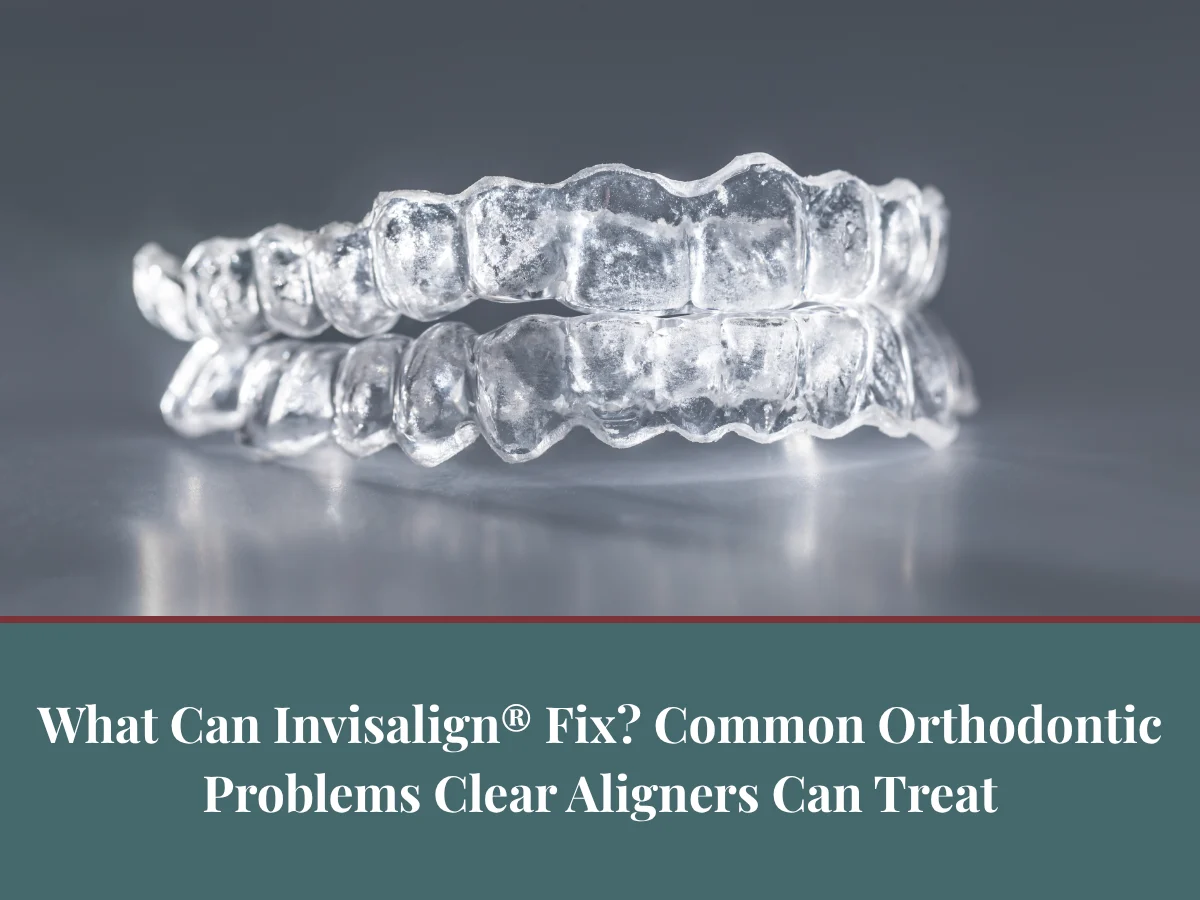
Invisalign uses a series of custom-made clear aligners that gradually move your teeth into improved positions.
Each set of aligners applies controlled pressure to specific teeth. As you progress through your treatment plan, your teeth slowly shift according to the movements planned by your dental provider.
For treatment to work as intended, aligners typically need to be worn for about 20 to 22 hours each day.
What Orthodontic Problems Can Invisalign® Treat?
Invisalign can address many mild to moderate orthodontic concerns and, depending on the case, some more complex alignment problems.
Crowded Teeth
Crowding occurs when there isn’t enough space in the jaw for all of the teeth to fit properly.
Teeth may overlap, rotate, or grow out of alignment. Crowded teeth can also make brushing and flossing more difficult, allowing plaque to collect in hard-to-reach areas.
Invisalign can gradually reposition crowded teeth and create a more balanced alignment.
Gaps Between Teeth
Spaces between teeth may occur naturally or develop because of differences in tooth size, jaw size, or missing teeth.
Invisalign may be used to gradually close certain gaps and create a more even-looking smile.
Closing unwanted spaces can also reduce areas where food and plaque may become trapped.
Overbite
An overbite occurs when the upper front teeth overlap the lower front teeth more than they should.
Some degree of overlap is normal, but a deeper overbite can contribute to tooth wear, discomfort, or other bite-related concerns.
In appropriate cases, Invisalign can help improve the relationship between the upper and lower teeth.
Underbite
An underbite occurs when the lower front teeth sit in front of the upper front teeth when the mouth is closed.
Depending on the cause and severity of the underbite, Invisalign may help improve tooth positioning. More complex cases involving jaw development may require additional orthodontic treatment.
Crossbite
A crossbite occurs when some upper teeth sit inside the lower teeth rather than outside them.
If left untreated, certain crossbites may contribute to uneven tooth wear or gum problems.
Invisalign can be used in some cases to improve the position of the affected teeth and create a more balanced bite.
Open Bite
An open bite occurs when the upper and lower teeth do not meet properly when the mouth is closed.
This can affect biting, chewing, and sometimes speech.
Depending on the cause, Invisalign may help move the teeth into positions that allow the bite to close more effectively.
Crooked or Rotated Teeth
Individual teeth that are crooked or rotated can often be corrected with Invisalign.
Clear aligners apply carefully planned pressure to gradually move these teeth into better alignment with the rest of your smile.
Can Invisalign® Fix Every Orthodontic Problem?
No orthodontic treatment is right for every patient.
While Invisalign can treat many alignment and bite concerns, some cases may require traditional braces or another orthodontic approach. This may be more likely when there are:
- Severe bite problems
- Significant jaw alignment concerns
- Teeth that require complex movements
- Major skeletal discrepancies
- Certain impacted teeth
A dental evaluation is necessary to determine which treatment will provide the most predictable result.
Does the Severity of the Problem Matter?
Yes.
Two patients may have the same type of orthodontic concern but require very different treatment plans depending on its severity.
For example, mild crowding may require relatively simple tooth movement, while severe crowding could require additional space management or other treatment considerations.
This is why Invisalign treatment plans are customized rather than using the same approach for every patient.
Who Is a Good Candidate for Invisalign®?
You may be a good candidate for Invisalign if you:
- Have mild to moderate tooth alignment concerns
- Have healthy teeth and gums
- Want a discreet orthodontic option
- Are willing to wear your aligners consistently
- Can remove your aligners for eating and oral hygiene
- Are committed to attending follow-up appointments
Your dentist will also evaluate your bite and overall oral health before recommending treatment.
What Happens During an Invisalign® Evaluation?
Your Invisalign consultation allows your dentist to determine whether clear aligners can address your specific concerns.
The evaluation may include:
Examining Your Teeth and Bite
Your dentist will look at the position of your teeth and how your upper and lower teeth come together.
Reviewing Your Oral Health
Any cavities, gum disease, or other oral health concerns may need to be treated before orthodontic treatment begins.
Taking Digital Scans or Images
Digital scans can be used to create a detailed model of your teeth and plan how they will move throughout treatment.
Discussing Your Treatment Goals
Your dentist will ask what you’d like to improve about your smile and explain whether Invisalign can help achieve those goals.
How Long Does Invisalign® Take to Correct Alignment Problems?
Treatment time depends on the complexity of your case and how much tooth movement is required.
Some mild cases may be completed within several months, while more involved treatment may take a year or longer.
Wearing your aligners according to your dentist’s instructions is one of the most important factors in keeping treatment on schedule.
Why Choose Smileworld Family Dental for Invisalign®?
At Smileworld Family Dental, we take a personalized approach to Invisalign treatment. We evaluate your teeth, bite, oral health, and smile goals before recommending clear aligners.
If Invisalign is appropriate for your needs, we’ll develop a customized treatment plan and guide you through each stage of the process to help you achieve a healthier, more confident smile.