Dental emergencies often happen without warning, and knowing when to seek immediate care can make all the difference. While some dental issues can wait for a scheduled appointment, others require prompt treatment to relieve pain, prevent infection, or even save a tooth. Understanding the signs of a true dental emergency can help you make the right decision when every minute counts.
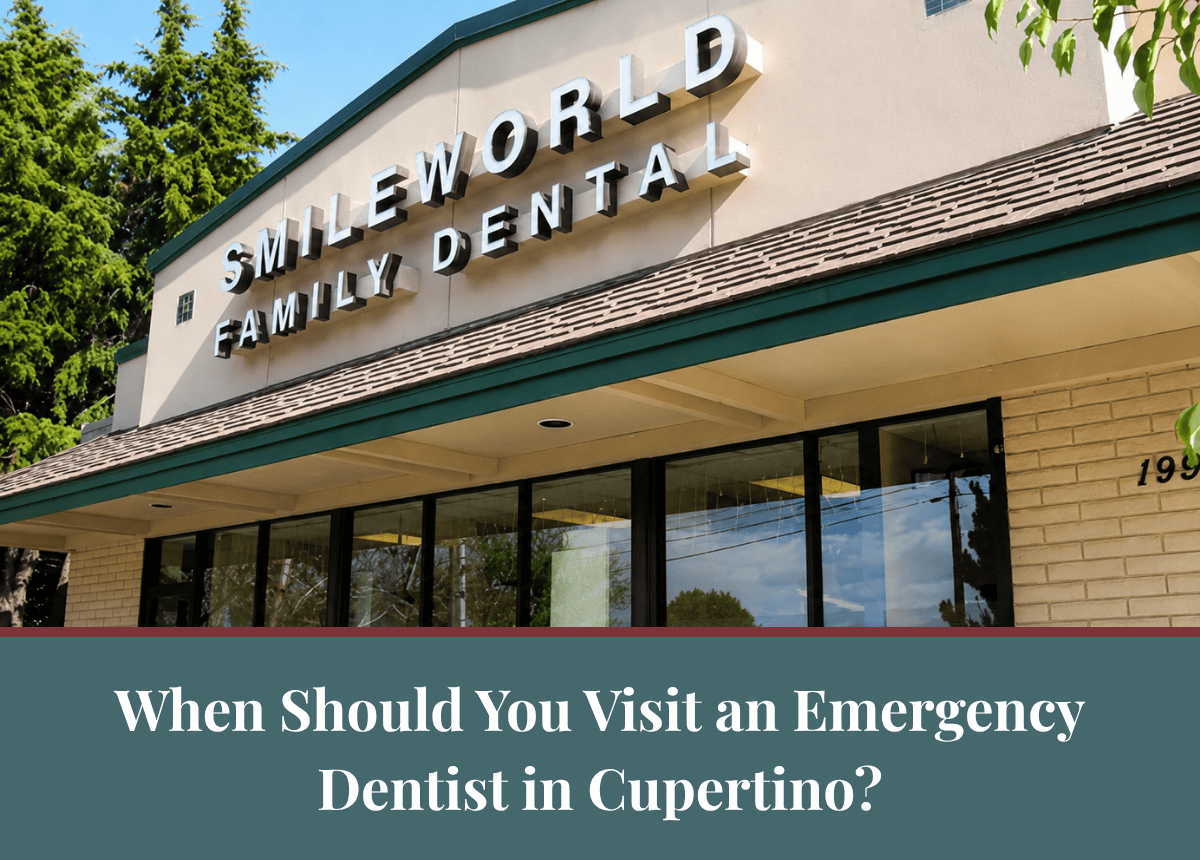
At Smileworld Family Dental, we provide emergency dental care for patients in Cupertino, CA. Whether you’re experiencing severe tooth pain, a knocked-out tooth, or another urgent dental problem, our team is here to help you receive timely, compassionate care.
What Is Considered a Dental Emergency?
Not every dental problem requires same-day treatment, but some situations should be evaluated as soon as possible.
Common dental emergencies include:
- Severe or persistent tooth pain
- A knocked-out permanent tooth
- A cracked, chipped, or broken tooth
- A loose or displaced tooth after an injury
- A dental abscess or swelling
- Bleeding that doesn’t stop after an injury
- A lost filling or crown causing significant pain
- Injury to the gums, lips, cheeks, or tongue
If you’re unsure whether your situation is an emergency, it’s always best to contact your dental office for guidance.
Signs You Should See an Emergency Dentist Right Away
Some symptoms should never be ignored because they may indicate a serious dental problem.
Severe Toothache
Persistent or intense tooth pain may be caused by deep decay, infection, or damage to the tooth’s nerve.
Prompt evaluation can help identify the source of the pain and prevent the condition from worsening.
Knocked-Out Tooth
A knocked-out permanent tooth requires immediate attention.
If treated quickly, there may be a better chance of saving the tooth.
Swelling or Dental Abscess
Facial swelling, gum swelling, or a painful abscess may indicate an infection.
Because dental infections can spread, prompt treatment is important to protect both your oral and overall health.
Broken or Cracked Tooth
Even if a cracked tooth doesn’t hurt immediately, bacteria can enter the damaged area and lead to more serious problems over time.
Early treatment can help preserve the tooth whenever possible.
What Should You Do Before Visiting an Emergency Dentist?
Knowing what to do immediately after a dental injury can improve the outcome of treatment.
If a Tooth Is Knocked Out
- Pick up the tooth by the crown, not the root.
- Gently rinse it with clean water if it’s dirty.
- Avoid scrubbing or removing attached tissue.
- If possible, place the tooth back into the socket.
- If that isn’t possible, keep it in milk or a tooth preservation solution.
- Contact an emergency dentist immediately.
If You Have a Toothache
- Rinse your mouth with warm water.
- Carefully floss around the affected tooth to remove trapped food.
- Avoid placing aspirin directly on the gums.
- Use a cold compress on the outside of your face if swelling is present.
If You Break a Tooth
- Save any broken pieces if possible.
- Rinse your mouth with warm water.
- Apply a cold compress to reduce swelling.
- Avoid chewing on the injured side until your appointment.
Common Emergency Dental Treatments
The appropriate treatment depends on the cause of your emergency.
An emergency dentist may recommend:
Dental Fillings or Bonding
Minor chips or fractures may be repaired using tooth-colored composite materials.
Dental Crowns
Larger fractures or weakened teeth may require a dental crown to restore strength and function.
Root Canal Therapy
If the tooth’s pulp becomes infected or damaged, root canal treatment may help eliminate infection while preserving the natural tooth.
Tooth Extraction
In situations where a tooth cannot be saved, extraction may be the healthiest option to prevent additional complications.
How to Prevent Dental Emergencies
While not every emergency can be avoided, practicing good oral habits can reduce your risk.
Helpful preventive measures include:
- Visiting your dentist for regular exams and cleanings
- Wearing a custom mouthguard during sports
- Avoiding chewing ice, popcorn kernels, and hard candy
- Using scissors instead of your teeth to open packages
- Treating cavities and damaged teeth before they worsen
- Maintaining good brushing and flossing habits
Preventive dental care often helps identify small issues before they become urgent problems.
Why Choose Smileworld Family Dental for Emergency Dental Care?
Smileworld Family Dental is committed to providing compassionate, patient-centered care when unexpected dental problems arise.
Our team carefully evaluates each emergency, explains your treatment options, and develops a plan focused on relieving discomfort while restoring your oral health. Whether you’re experiencing severe tooth pain, a dental injury, or another urgent concern, we’re here to help you receive timely, personalized care.