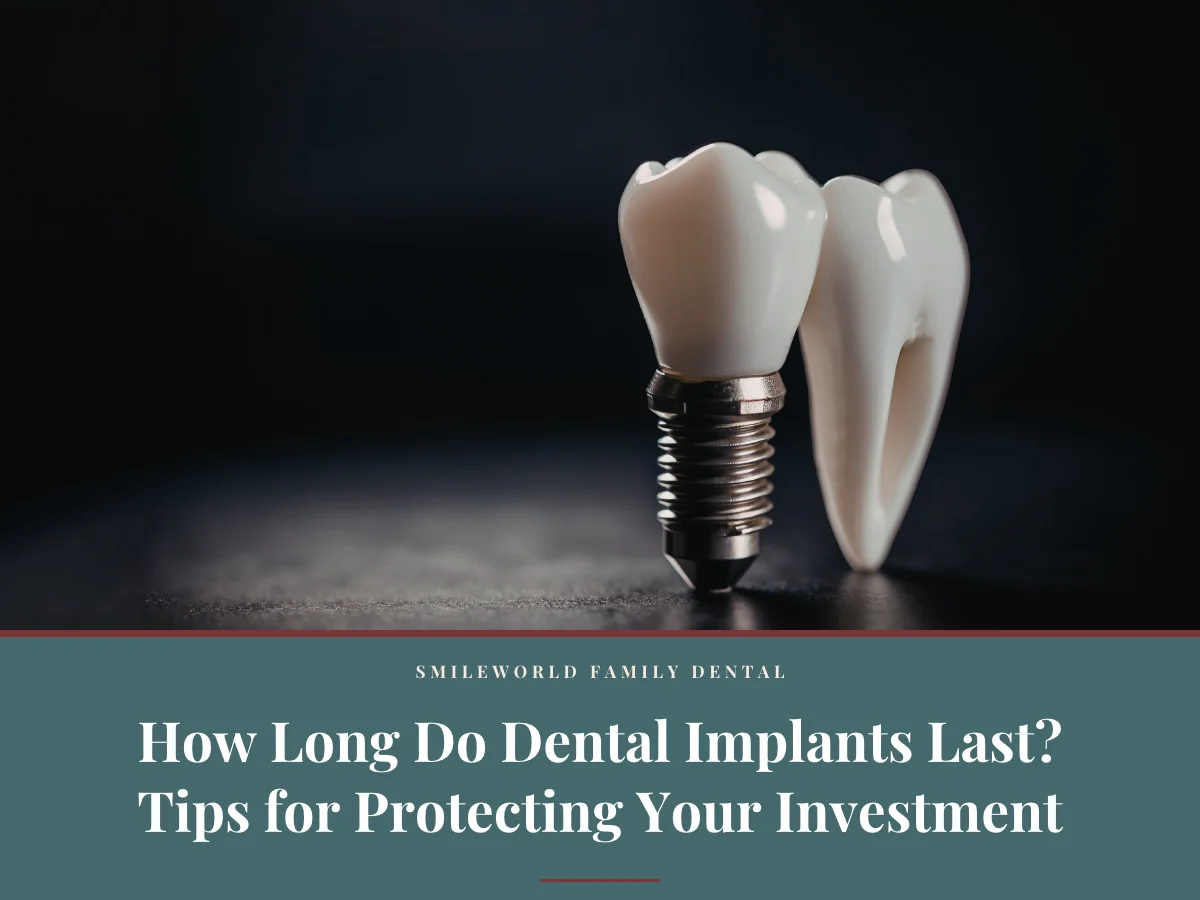
Dental implants are designed to be a long-term solution for replacing missing teeth. With proper care, they can remain stable and functional for many years, but their lifespan depends on several factors, including oral hygiene, gum health, bite forces, lifestyle habits, and overall health.
Understanding how to care for your implant can help protect both the restoration and the surrounding bone and gums.
At Smileworld Family Dental, we help patients maintain healthy implant restorations through personalized care, routine exams, and preventive dentistry.
How Long Do Dental Implants Usually Last?
Dental implants can last many years and may remain functional for decades with proper care.
However, it is important to understand that the implant post and the visible restoration do not always have the same lifespan.
The implant post is placed in the jawbone and may remain stable for a very long time when the surrounding tissues stay healthy.
The crown or other restoration attached to the implant may experience normal wear and may eventually need repair or replacement.
What Parts of a Dental Implant Can Wear Out?
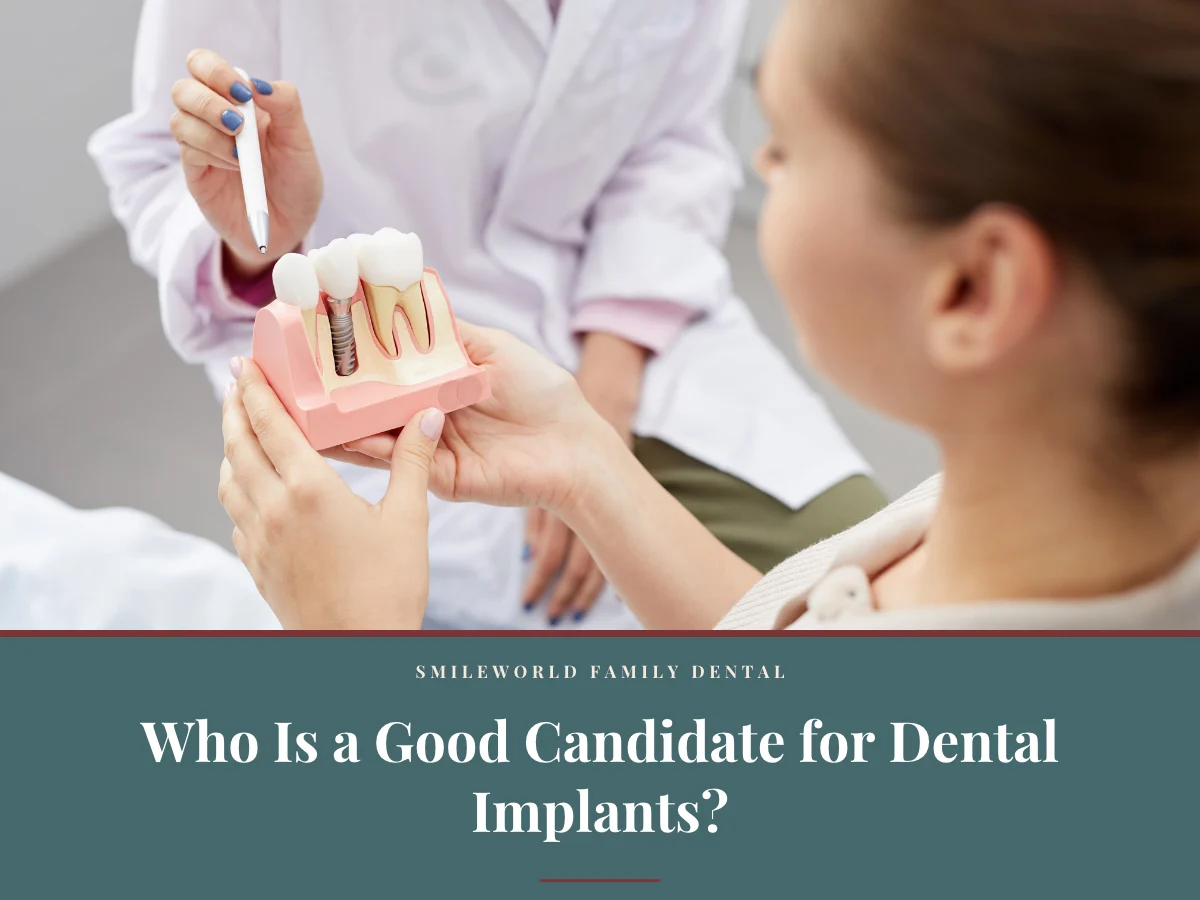
A dental implant restoration usually includes several components.
These may include:
- The implant post
- The abutment
- The dental crown, bridge, or other restoration
The implant post is designed to integrate with the jawbone, while the restoration above the gumline is exposed to everyday biting and chewing forces.
Because of this, the crown or restoration may wear down sooner than the implant itself.
What Factors Affect How Long Dental Implants Last?
Several factors can influence implant longevity.
Oral Hygiene
Good oral hygiene is one of the most important factors.
Although the implant itself cannot develop a cavity, bacteria can still affect the gums and bone around it.
Plaque buildup around an implant can contribute to inflammation and potentially lead to problems with the supporting tissues.
Gum Health
Healthy gums provide important support around an implant.
Patients with a history of gum disease may need closer monitoring and more frequent professional cleanings to help maintain the health of the tissues surrounding the implant.
Bone Health
Dental implants depend on healthy bone for stability.
Bone loss around an implant can compromise its support over time, which is why routine dental monitoring is important.
Teeth Grinding and Clenching
Grinding or clenching your teeth can place excessive force on implant restorations.
This may increase the risk of:
- Crown wear
- Chipping
- Loosening
- Excessive stress on the implant
A nightguard may be recommended for patients who grind or clench their teeth.
Smoking and Tobacco Use
Tobacco use can affect gum health and healing around dental implants.
Smoking may also increase the risk of complications that affect the long-term success of implant treatment.
Overall Health
Certain medical conditions can affect healing and oral health.
Your dentist should be aware of your medical history, medications, and any changes in your health that may affect implant maintenance.
Can Dental Implants Get Cavities?
No.
The implant post and crown are made from materials that cannot develop tooth decay.
However, the tissues around the implant can still develop problems.
Plaque and bacteria can accumulate around the gumline and may contribute to inflammation or infection if oral hygiene is poor.
This is why brushing, flossing, and professional dental cleanings remain essential.
What Is Peri-Implant Disease?
Peri-implant disease refers to inflammation affecting the tissues around a dental implant.
Early inflammation around the gums is sometimes called peri-implant mucositis.
If the condition progresses and begins affecting the supporting bone, it may develop into peri-implantitis.
Possible signs can include:
- Red or swollen gums
- Bleeding around the implant
- Tenderness
- Gum recession
- Bone loss
- Implant looseness in advanced cases
Early detection is important, so contact your dentist if you notice changes around your implant.
How Should You Clean Around a Dental Implant?
Daily cleaning around an implant is similar to caring for natural teeth.
Brush Twice a Day
Brush your teeth and implant restoration twice daily using a soft-bristled toothbrush.
Pay special attention to the gumline around the implant.
Clean Between the Teeth
Flossing or using other interdental cleaning tools helps remove plaque from areas your toothbrush cannot reach.
Depending on your restoration, your dentist may recommend:
- Traditional floss
- Floss threaders
- Interdental brushes
- Water flossers
Attend Regular Professional Cleanings
Professional cleanings help remove hardened deposits and allow your dental team to examine the tissues around the implant.
How Often Should Dental Implants Be Checked?
Dental implants should be evaluated as part of your regular dental visits.
Many patients benefit from checkups approximately every six months, although some may need more frequent visits depending on their gum health, implant history, and overall risk factors.
Your dentist will recommend a schedule based on your individual needs.
What Foods Should You Avoid With Dental Implants?
Once healing is complete, dental implants are designed to function much like natural teeth.
However, certain habits can increase the risk of damaging the restoration.
Try to avoid:
- Chewing ice
- Biting hard candy
- Cracking nuts with your teeth
- Chewing pens or other hard objects
- Using your teeth to open packages
These habits can damage both implant crowns and natural teeth.
Can You Exercise After Dental Implant Placement?
Immediately after implant surgery, your dentist may recommend limiting strenuous exercise for a short period.
Physical activity can increase blood flow and may contribute to bleeding or swelling during the early healing phase.
Follow your dentist’s specific instructions regarding when it is safe to resume exercise.
Once healing is complete, normal physical activity should not affect a healthy implant.
How Can You Make Dental Implants Last Longer?
You can help protect your implant by following a few important habits.
- Brush twice daily.
- Clean between your teeth and implants every day.
- Attend regular dental exams and cleanings.
- Avoid smoking and tobacco products.
- Wear a nightguard if you grind your teeth.
- Avoid chewing hard objects.
- Follow your dentist’s maintenance recommendations.
- Contact your dentist if anything feels loose or uncomfortable.
Consistent care can help protect your investment and support long-term oral health.
What Are Signs That an Implant May Need Attention?
Contact your dentist if you notice:
- Pain around the implant
- Bleeding gums
- Persistent swelling
- Gum recession
- A loose crown
- Changes in your bite
- Difficulty chewing
- A feeling that the implant is moving
- Persistent bad taste or drainage
Dental implants should feel stable and comfortable once healing is complete.
Can an Implant Crown Be Replaced Without Replacing the Implant?
In many cases, yes.
If the implant post remains healthy and stable but the crown becomes worn, chipped, or damaged, the restoration may be replaced without removing the implant itself.
Your dentist will evaluate both the crown and implant before recommending treatment.
What Happens If a Dental Implant Fails?
Implant failure is not common, but it can occur.
Possible causes may include:
- Poor healing
- Infection
- Bone loss
- Excessive bite forces
- Smoking
- Poor oral hygiene
If an implant becomes loose or painful, your dentist will evaluate the area and determine the appropriate next step.
Depending on the cause, additional treatment may be possible.
Why Choose Smileworld Family Dental for Implant Maintenance?
At Smileworld Family Dental, we focus not only on restoring missing teeth but also on helping patients protect their dental work over the long term.
Our team can monitor your implant, surrounding gums, bite, and restoration during routine visits and provide personalized recommendations to help maintain your smile.
Consistent preventive care plays an important role in keeping dental implants healthy and functional for years to come.