If you’re looking to improve your smile, two of the most common cosmetic dentistry options are dental veneers and teeth whitening. Both treatments can enhance the appearance of your teeth, but they are designed to address different concerns.
Teeth whitening focuses primarily on brightening natural tooth color, while veneers can change the color, shape, size, and overall appearance of selected teeth.
At Smileworld Family Dental, cosmetic treatment is personalized to your smile goals, oral health, and the type of changes you want to make.
What Is Professional Teeth Whitening?
Professional teeth whitening is a cosmetic treatment designed to reduce certain types of stains and discoloration.
Whitening products use bleaching agents to help brighten natural tooth enamel and create a lighter-looking smile.
Professional whitening may be a good option if your main concern is discoloration caused by factors such as:
- Coffee
- Tea
- Red wine
- Tobacco
- Certain foods
- Natural aging
Whitening does not change the shape or position of your teeth.
What Are Dental Veneers?
Dental veneers are thin, custom-made shells placed over the front surface of teeth.
They can improve several cosmetic concerns at the same time, including:
- Discoloration
- Small chips
- Uneven tooth shape
- Minor gaps
- Slightly worn teeth
- Small or irregularly shaped teeth
- Certain mild alignment concerns
Veneers may be made from porcelain or composite material, depending on your treatment plan.
Dental Veneers vs. Teeth Whitening: What’s the Main Difference?
The biggest difference is the type of cosmetic concern each treatment addresses.
Teeth whitening primarily changes tooth color.
Veneers can change multiple aspects of a tooth’s appearance, including color, shape, size, and symmetry.
If you’re happy with the shape of your teeth but want a brighter smile, whitening may be sufficient. If you want to correct several cosmetic concerns at once, veneers may offer a more comprehensive solution.
Which Treatment Works Better for Tooth Discoloration?
It depends on the type of discoloration.
Teeth Whitening
Professional whitening often works well for external stains caused by foods, beverages, tobacco, and natural aging.
However, not every type of discoloration responds equally well to whitening.
Dental Veneers
Veneers may be considered when discoloration is more difficult to correct with whitening alone.
Because veneers cover the front surface of the tooth, they can mask certain stains while also improving tooth shape and appearance.
Your dentist can help determine why your teeth are discolored before recommending treatment.
Can Teeth Whitening Fix Chipped or Uneven Teeth?
No.
Whitening changes tooth color but does not repair chips, gaps, worn edges, or uneven tooth shapes.
If these concerns are part of what you would like to improve, veneers or another cosmetic treatment may be more appropriate.
Which Treatment Is More Conservative?
Teeth whitening is generally the more conservative treatment because it does not require changing the shape of your natural teeth.
Traditional veneers often require some enamel preparation before placement.
For patients whose only concern is tooth color, whitening may be the better first option.
How Long Do the Results Last?
The longevity of each treatment varies.
Teeth Whitening Results
Whitening results can gradually fade as your teeth are exposed to staining foods, drinks, and normal aging.
Good oral hygiene and occasional touch-ups may help maintain the results.
Dental Veneer Results
Veneers are a longer-term cosmetic treatment and can last many years with appropriate care.
Their lifespan depends on factors such as:
- Veneer material
- Oral hygiene
- Bite
- Teeth grinding
- Daily habits
Both treatments require ongoing dental care to maintain a healthy smile.
Do Veneers Stay White?
Porcelain veneers are generally resistant to staining.
However, the natural teeth around them can still change color over time.
This is one reason your dentist may discuss tooth whitening before veneer treatment if you’re considering both procedures.
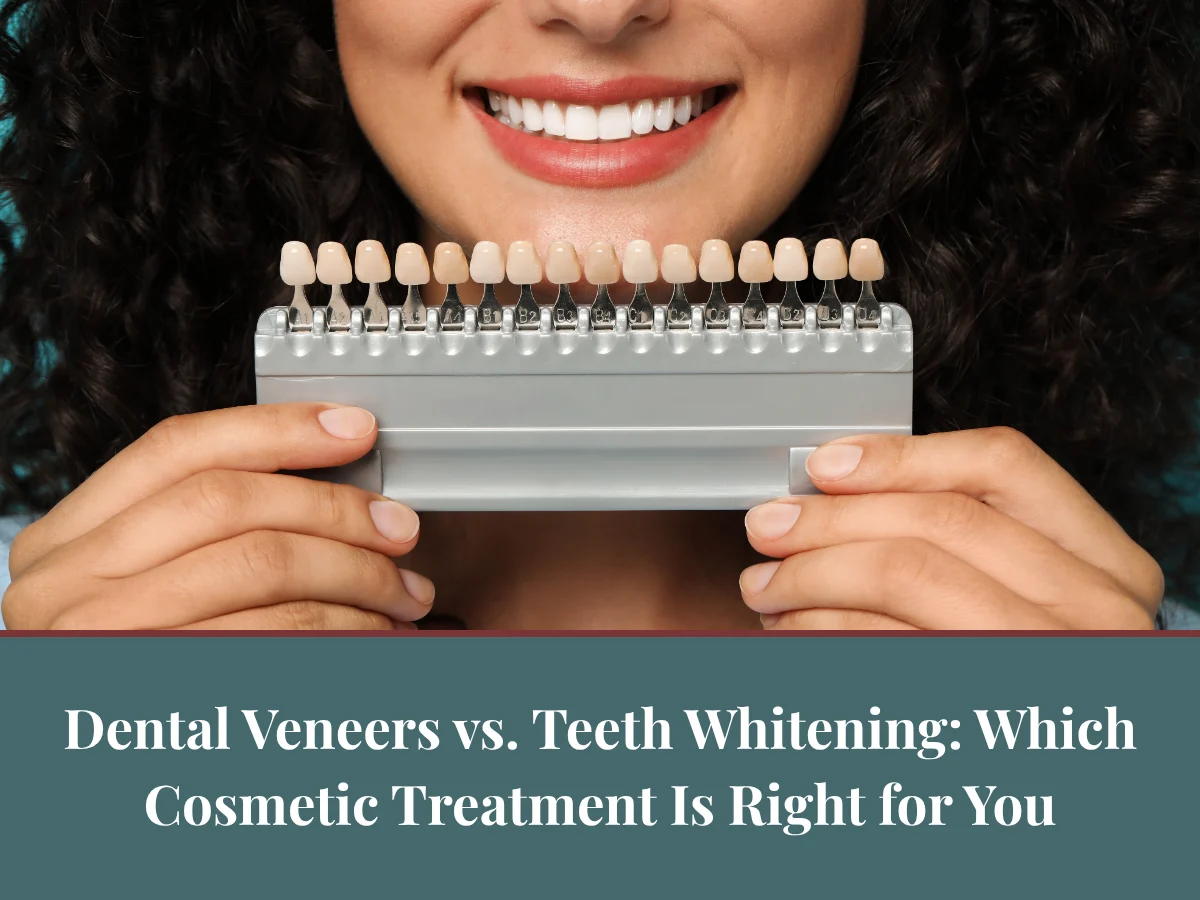
Choosing the veneer shade carefully can help create a more consistent-looking smile.
Can You Whiten Teeth After Getting Veneers?
Whitening products do not change the color of porcelain or composite restorations the way they whiten natural enamel.
If you whiten your natural teeth after veneers are placed, you could create a color mismatch.
For this reason, patients who want both whitening and veneers may be advised to complete whitening first so the veneers can be matched to the desired tooth shade.
Which Treatment Is Faster?
Teeth whitening is typically the faster cosmetic treatment.
Professional whitening may provide noticeable improvement in a relatively short period of time.
Veneers usually require more planning because the teeth must be evaluated, prepared if necessary, and the restorations designed and placed.
Which Treatment Requires More Maintenance?
Both treatments benefit from good oral hygiene and regular dental visits.
Veneers require additional care to help prevent chipping or damage, such as avoiding biting hard objects.
Whitened teeth may require occasional touch-up treatment depending on your diet and lifestyle.
Are Veneers or Whitening Better for a Smile Makeover?
If your main concern is tooth color, whitening may be enough to achieve your desired improvement.
If you want to address several cosmetic concerns at once, veneers may provide a more significant change.
A smile makeover may also combine treatments depending on your needs.
For example, whitening may be used on most teeth while veneers are placed on selected teeth that need changes in shape or structure.
How Do You Choose Between Veneers and Teeth Whitening?
Consider what you would like to change about your smile.
Teeth whitening may be appropriate if:
- Your main concern is tooth discoloration.
- Your teeth are otherwise healthy and well-shaped.
- You want a conservative cosmetic treatment.
- Your staining is likely to respond to whitening.
Veneers may be appropriate if:
- You have discoloration that does not respond well to whitening.
- You want to improve tooth shape or size.
- You have minor chips or gaps.
- You want to address several cosmetic concerns at once.
A dental examination is the best way to determine which option matches your goals.
Why Choose Smileworld Family Dental for Cosmetic Dentistry?
At Smileworld Family Dental, we take the time to understand what you want to improve before recommending cosmetic treatment.
We’ll evaluate your teeth and gums, discuss your goals, and explain whether professional whitening, dental veneers, or another treatment may provide the most appropriate result for your smile.
Our goal is to help you achieve a natural-looking improvement while supporting the long-term health of your teeth.