Dental implants can be an effective option for replacing missing teeth, but they are not automatically the right solution for every patient. Successful implant treatment depends on several factors, including the health of your gums and jawbone, your overall health, and your ability to maintain good oral hygiene.
If you’re considering dental implants, a comprehensive evaluation can help determine whether you’re a good candidate and whether any additional treatment may be needed before implant placement.
At Smileworld Family Dental, we evaluate each patient’s individual needs before recommending a tooth replacement option.
What Are Dental Implants?
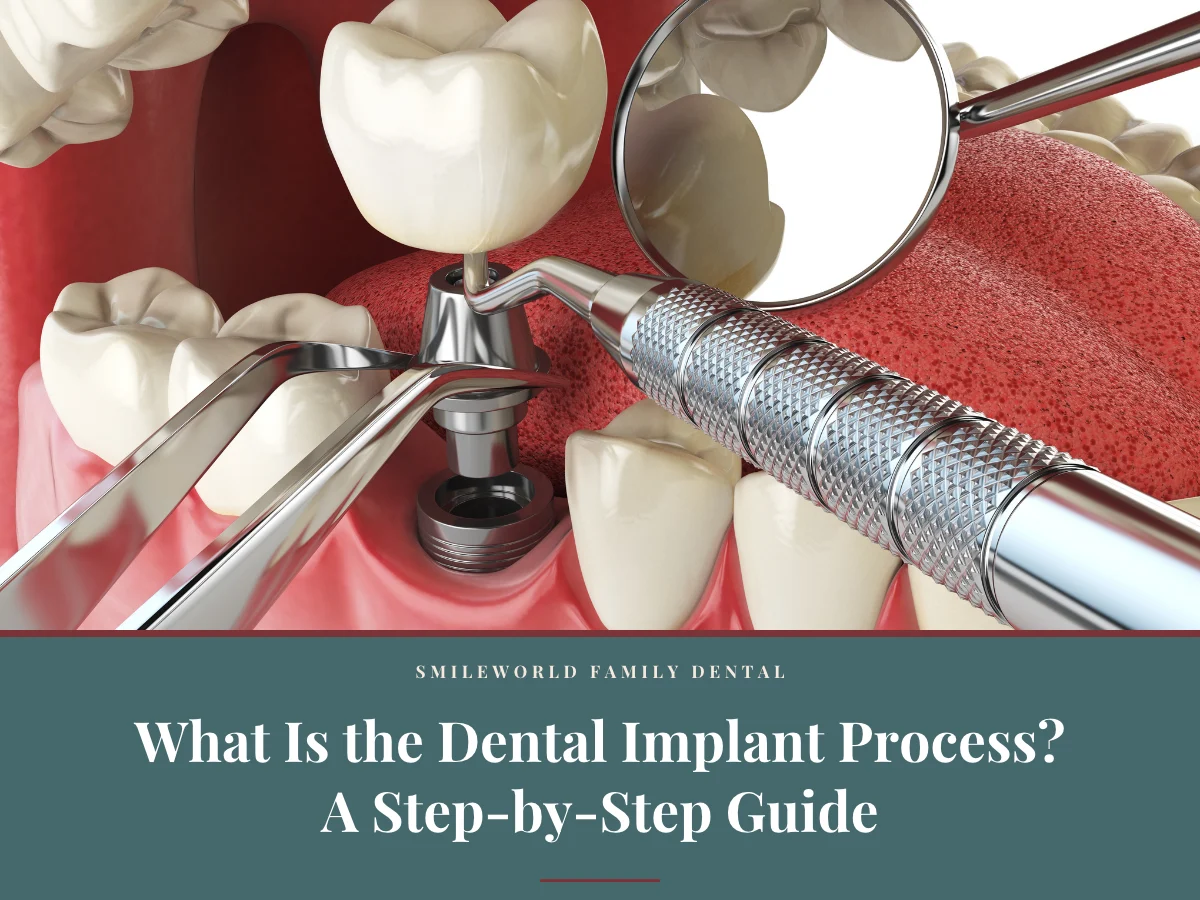
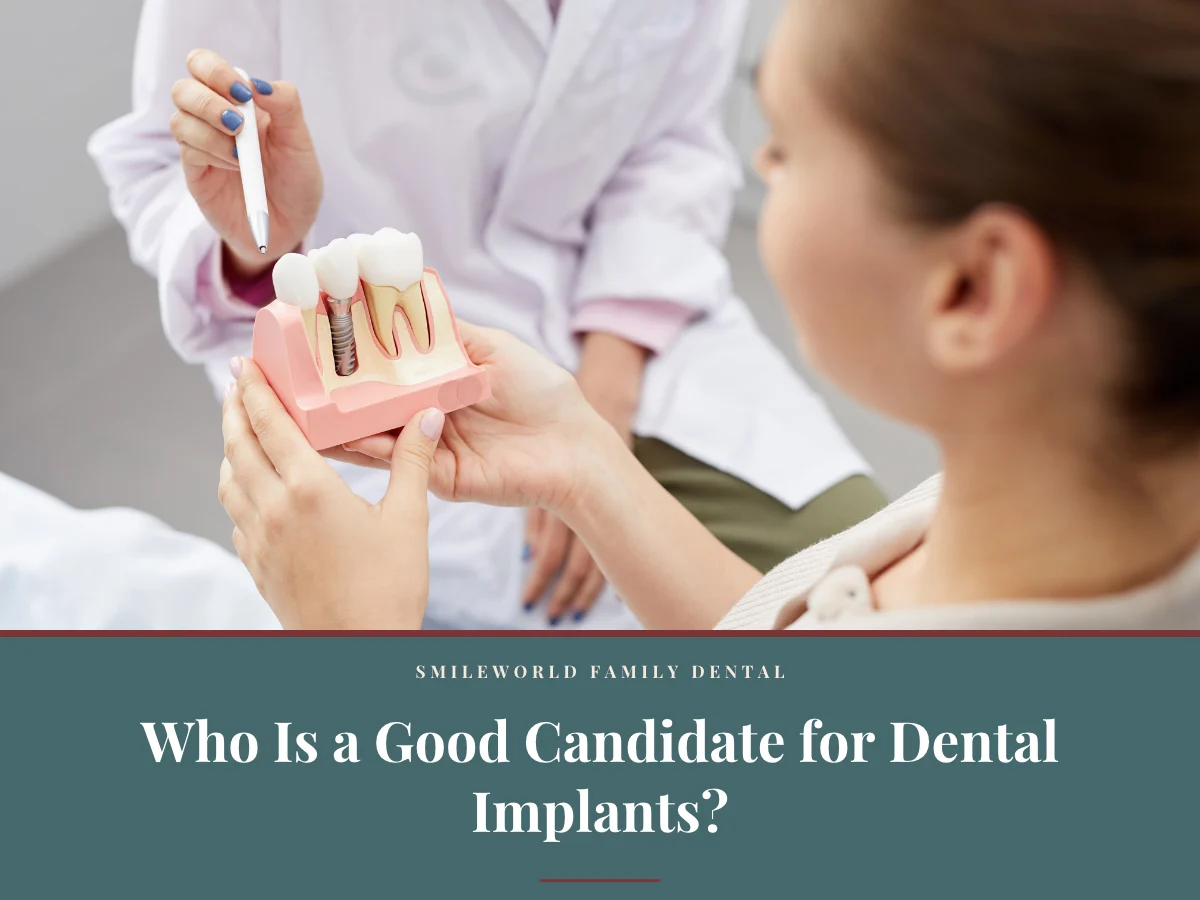
Dental implants are small posts placed into the jawbone to replace the roots of missing teeth.
Once an implant integrates with the surrounding bone, it can provide a stable foundation for a dental restoration such as a:
- Crown
- Bridge
- Other implant-supported restoration
Because implants are supported by the jawbone, they do not necessarily require neighboring teeth for support in the way a traditional dental bridge may.
Who May Be a Good Candidate for Dental Implants?
Many adults who are missing one or more teeth may qualify for dental implants.
Good candidates generally have several characteristics that support successful treatment and long-term implant health.
You Have One or More Missing Teeth
Dental implants may be considered when a tooth has already been lost or when a severely damaged tooth cannot be predictably restored.
Implant treatment may be used to replace:
- A single missing tooth
- Multiple missing teeth
- Several teeth as part of an implant-supported restoration
The number and location of missing teeth help determine the appropriate treatment plan.
You Have Healthy Gums
Healthy gums are important because they support the tissues surrounding a dental implant.
Active gum disease may need to be treated before implant surgery.
Signs of gum problems can include:
- Bleeding when brushing or flossing
- Red or swollen gums
- Gum recession
- Persistent bad breath
- Loose teeth
Your dentist will evaluate your periodontal health before recommending an implant.
You Have Enough Jawbone to Support an Implant
Dental implants need adequate bone for stability.
When a tooth is lost, the surrounding jawbone can gradually decrease in volume because it is no longer being stimulated by the tooth root.
Your dentist may use dental imaging to evaluate the amount and quality of bone available.
If there is not enough bone, you may still be a candidate with additional treatment.
Can You Get Dental Implants If You Have Bone Loss?
Possibly.
Bone grafting may be recommended to rebuild or strengthen an area before an implant is placed.
The need for grafting depends on factors such as:
- The amount of bone loss
- The location of the missing tooth
- Your overall oral health
- The planned implant position
A dental evaluation is necessary to determine whether bone grafting could make implant treatment possible.
You Maintain Good Oral Hygiene
Dental implants cannot develop cavities, but the gums and bone around them can still become unhealthy.
Good candidates should be committed to:
- Brushing twice daily
- Cleaning between the teeth every day
- Keeping the area around the implant clean
- Attending regular dental checkups
- Scheduling professional cleanings
Long-term maintenance is important for protecting the tissues that support the implant.
Your Overall Health Supports Healing
Dental implant placement involves oral surgery, so your general health is part of the evaluation.
Your dentist will review your medical history and may ask about:
- Chronic health conditions
- Previous surgeries
- Current medications
- Healing problems
- Allergies
- Tobacco use
Some health conditions do not automatically prevent implant treatment, but they may affect treatment planning or healing.
Can You Get Dental Implants If You Have Diabetes?
Having diabetes does not necessarily mean you cannot receive dental implants.
However, poorly controlled diabetes can affect healing and may increase the risk of complications.
Your dentist may want to understand how well your condition is managed before proceeding with implant treatment.
Coordination with your healthcare provider may also be appropriate in some situations.
Can Smokers Get Dental Implants?
Smoking does not always make implant treatment impossible, but it can increase the risk of complications.
Tobacco use can affect:
- Blood flow to the gums
- Healing after surgery
- Gum health
- Bone health
- Long-term implant stability
If you smoke, your dentist may discuss how tobacco use affects implant success and may recommend stopping before and after treatment.
Does Age Matter for Dental Implants?
There is generally no strict upper age limit for dental implants.
Older adults may still be candidates if they have adequate oral and general health.
For younger patients, implant treatment is usually delayed until jaw growth is substantially complete.
Your dentist will evaluate development, bone health, and individual circumstances rather than making a decision based on age alone.
Can You Get an Implant Immediately After Losing a Tooth?
In some situations, an implant may be placed at or near the time a tooth is extracted.
However, immediate implant placement is not appropriate for everyone.
Factors that influence timing include:
- Infection
- Bone condition
- Gum health
- Implant stability
- Location of the tooth
Some patients benefit from allowing the extraction site to heal before implant placement.
Who May Need Additional Treatment Before Dental Implants?
You may still qualify for dental implants even if you are not immediately ready for placement.
Additional treatment may be needed if you have:
Gum Disease
Periodontal disease should usually be brought under control before implant surgery.
Tooth Decay
Cavities or infections in nearby teeth may need treatment first.
Insufficient Bone
Bone grafting may help create a more stable implant foundation.
Damaged Teeth
Teeth that cannot be saved may need to be extracted before implant placement.
Poor Oral Hygiene
Your dentist may recommend improving daily oral care before beginning treatment.
Addressing these concerns helps create a healthier environment for implant healing.
Who May Not Be a Good Candidate for Dental Implants?
Certain circumstances may make implant treatment more difficult or require alternative approaches.
These can include:
- Uncontrolled gum disease
- Inadequate bone that cannot be successfully augmented
- Certain uncontrolled medical conditions
- Inability to heal properly after surgery
- Poor oral hygiene
- Heavy tobacco use
- Certain medications or treatments that affect bone healing
These factors do not always mean implants are impossible. A professional evaluation is necessary to understand your individual risks and options.
What Happens During a Dental Implant Consultation?
Your consultation helps determine whether implants are appropriate for you.
Review of Your Dental History
Your dentist will ask about previous dental treatment, missing teeth, and any symptoms or concerns.
Medical History Review
Current medical conditions and medications are reviewed because they may affect healing or treatment planning.
Dental Examination
Your dentist evaluates:
- Teeth
- Gums
- Bite
- Missing-tooth areas
- Existing dental restorations
Dental Imaging
X-rays or other imaging may be used to assess bone levels, surrounding structures, and potential implant positions.
Treatment Planning
Your dentist will discuss whether you are a candidate and explain any treatment that may be needed before implant placement.
What Are the Benefits of Dental Implants?
For appropriate candidates, dental implants may offer several benefits.
These can include:
- Replacing missing teeth with a fixed restoration
- Helping restore chewing function
- Providing support without relying on neighboring teeth
- Helping maintain stimulation of the jawbone
- Creating a natural-looking tooth replacement
- Supporting long-term restorative treatment
The exact benefits depend on your individual treatment plan.
Are Dental Implants Right for Everyone With Missing Teeth?
No.
While implants are a valuable tooth replacement option, some patients may be better suited for another solution.
Alternatives may include:
- Dental bridges
- Removable partial dentures
- Complete dentures
- Other restorative treatments
Your dentist can compare the available options based on your oral health and preferences.
Why Choose Smileworld Family Dental for a Dental Implant Evaluation?
At Smileworld Family Dental, we take a personalized approach to replacing missing teeth.
We evaluate the health of your teeth, gums, jawbone, and bite while considering your overall treatment goals. If dental implants may be appropriate, we’ll explain the process and any preparatory care that could be needed.
Our goal is to help you understand your options so you can make an informed decision about your smile.