What Is the Dental Implant Process? A Step-by-Step Guide
Dental implants can provide a long-term way to replace missing teeth, but the treatment involves more than simply placing a replacement tooth. The process is carefully planned so the implant can become a stable foundation for a natural-looking restoration.
Because every patient’s oral health is different, the exact steps and timeline can vary. Some people are ready for implant placement soon after their evaluation, while others may need additional treatment before the implant can be placed.
At Smileworld Family Dental, treatment planning begins with a thorough evaluation of your teeth, gums, jawbone, and overall dental needs so you can understand what to expect before moving forward.
What Is a Dental Implant?
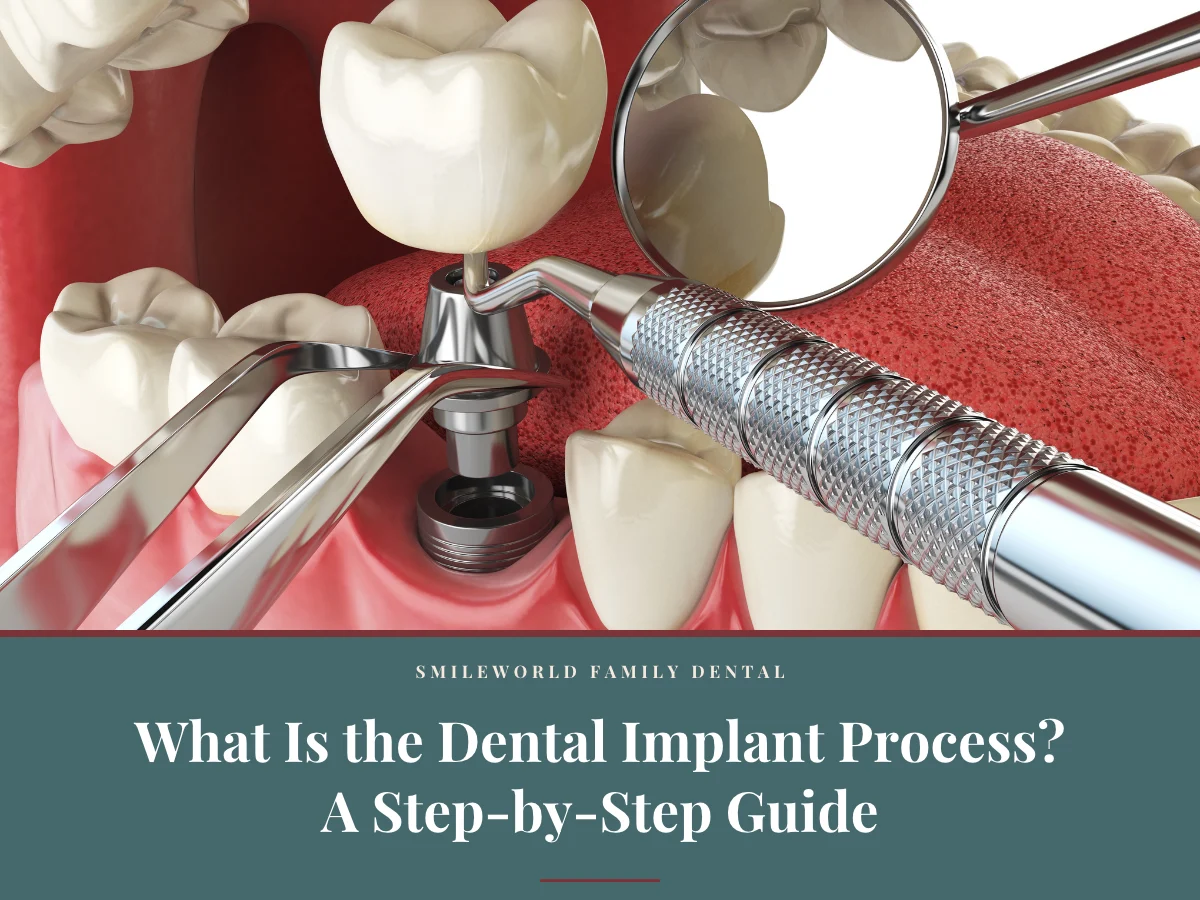
A dental implant is a small post placed into the jawbone to act as a replacement for the root of a missing tooth. After the implant has healed and integrated with the surrounding bone, it can support a dental crown or another type of restoration.
A complete implant restoration generally includes three main components:
- The implant post, which is placed in the jawbone
- The abutment, which connects the implant to the restoration
- The dental crown or other restoration that replaces the visible tooth
Not every treatment plan is identical, and your dentist will explain which components and procedures are appropriate for your situation.
Step 1: Dental Implant Consultation and Evaluation
The dental implant process begins with a comprehensive evaluation. Your dentist needs to determine whether an implant is a suitable option and whether your mouth is healthy enough to support treatment.
Your evaluation may include:
- A review of your dental and medical history
- An examination of your teeth and gums
- Digital X-rays or other dental imaging
- An evaluation of your jawbone
- A review of your bite and surrounding teeth
- A discussion of your tooth replacement goals
This information allows your dental team to create a treatment plan based on your individual needs.
Step 2: Preparing Your Mouth for an Implant
Some patients can move directly to implant placement, while others may need preparatory treatment first.
Depending on your oral health, preparation may include treating gum disease, removing a damaged tooth, or improving the amount of bone available to support an implant.
Tooth Extraction
If the tooth being replaced is still present but cannot be restored, it may need to be removed. Your dentist will determine whether the implant can be placed at the same appointment or whether the area should heal first.
Bone Grafting
Dental implants need adequate bone for support. When bone loss has occurred, a bone graft may be recommended to strengthen the area and create a better foundation for the implant.
Not everyone needs bone grafting, and the need for it can only be determined after evaluating your jawbone.
Step 3: Dental Implant Placement
Once the treatment area is ready, the implant post is surgically placed into the jawbone.
The procedure is typically performed using local anesthesia to help keep the area comfortable. A small opening is created in the gum and bone, the implant is positioned, and the area is then allowed to begin healing.
Your dentist will provide specific aftercare instructions to help protect the surgical site.
Step 4: Healing and Osseointegration
One of the most important stages of implant treatment is healing. During this period, the surrounding bone gradually bonds with the implant in a process called osseointegration.
This creates the stable foundation that allows the implant to function similarly to a natural tooth root.
Osseointegration often takes several months. The exact healing time depends on factors such as:
- The location of the implant
- Your bone quality and quantity
- Your overall health
- Your oral hygiene
- Whether bone grafting was required
- How your body heals
Your dentist will monitor the area during follow-up appointments to make sure healing is progressing as expected.
Step 5: Placing the Abutment
After the implant has successfully integrated with the jawbone, an abutment may be attached.
The abutment serves as the connection between the implant and the final dental restoration. Depending on the type of implant and treatment approach, the abutment may be placed during implant surgery or at a later appointment.
The gums may need a short period of healing around the abutment before the final restoration is placed.
Step 6: Creating Your Dental Crown
Once the implant is ready for restoration, your dental team will take an impression or digital scan to help design the replacement tooth.
The crown is customized to complement your natural teeth. Factors such as tooth color, shape, size, and bite are considered when creating the restoration.
For patients replacing several teeth, the final restoration may involve an implant-supported bridge or another implant-supported prosthesis rather than a single crown.
Step 7: Placing the Final Restoration
When the final restoration is ready, your dentist will check its fit, appearance, and how it comes together with your bite.
The crown or other restoration is then securely attached to the implant system. Once complete, the implant is designed to restore both the appearance and function of the missing tooth.
How Long Does the Dental Implant Process Take?
Dental implant treatment is usually a multi-stage process and can take several months from the initial consultation to placement of the final restoration.
The overall timeline depends on factors including:
- Whether a tooth needs to be extracted
- Whether bone grafting is necessary
- The number of implants being placed
- Healing and osseointegration
- Your general and oral health
- The type of final restoration
A personalized treatment plan gives you a more accurate idea of how long your individual process may take.
Is Dental Implant Surgery Painful?
Local anesthesia is typically used during implant placement to help keep the treatment area comfortable.
After the procedure, some temporary soreness, swelling, or tenderness can occur as the area heals. Your dental team will provide instructions for managing discomfort and caring for the surgical site.
Contact your dental provider if you experience symptoms that are severe, worsening, or different from what you were told to expect.
What Can Affect Dental Implant Healing?
Successful healing depends on both the treatment itself and how well the implant area is cared for afterward.
Factors that may affect healing include:
- Smoking or tobacco use
- Poor oral hygiene
- Uncontrolled gum disease
- Certain medical conditions
- Teeth grinding or excessive bite forces
- Not following post-treatment instructions
Before treatment, tell your dentist about your medical conditions and medications so these factors can be considered in your treatment plan.
How Do You Care for a Dental Implant After Treatment?
Once the implant restoration is complete, maintaining it requires consistent oral hygiene and regular dental care.
Helpful habits include:
- Brush twice a day
- Clean between your teeth and around the implant daily
- Attend routine dental exams and professional cleanings
- Avoid using your teeth to open packages or bite hard objects
- Wear a nightguard if recommended for teeth grinding
- Avoid tobacco products
Although an implant cannot develop a cavity, the gums and bone around it still need to remain healthy.
Who May Be a Candidate for Dental Implants?
Dental implants may be an option for adults who are missing one or more teeth and have adequate oral and general health for implant treatment.
Potential candidates often have:
- Healthy gums or controlled periodontal disease
- Adequate jawbone or the ability to undergo bone grafting
- Good oral hygiene habits
- Realistic expectations about the treatment process
- The ability to heal appropriately after oral surgery
A consultation is necessary because implant candidacy depends on more than simply having a missing tooth.
Why Choose Smileworld Family Dental for Dental Implant Care?
At Smileworld Family Dental, we take a personalized approach to replacing missing teeth. We evaluate your oral health, discuss your goals, and explain the steps involved so you can make an informed decision about treatment.
If dental implants are appropriate for your needs, your treatment plan will be based on the health of your teeth, gums, jawbone, and overall smile.