Children’s back teeth have deep grooves and pits that can easily trap food and bacteria. Even with regular brushing, these areas can be difficult to clean thoroughly, increasing the risk of cavities.
Dental sealants provide an added layer of protection by covering these vulnerable chewing surfaces with a thin protective coating.
At Smileworld Family Dental, we focus on preventive dental care that helps children maintain healthy smiles as they grow. Dental sealants may be recommended as part of your child’s personalized preventive care plan.
What Are Dental Sealants?
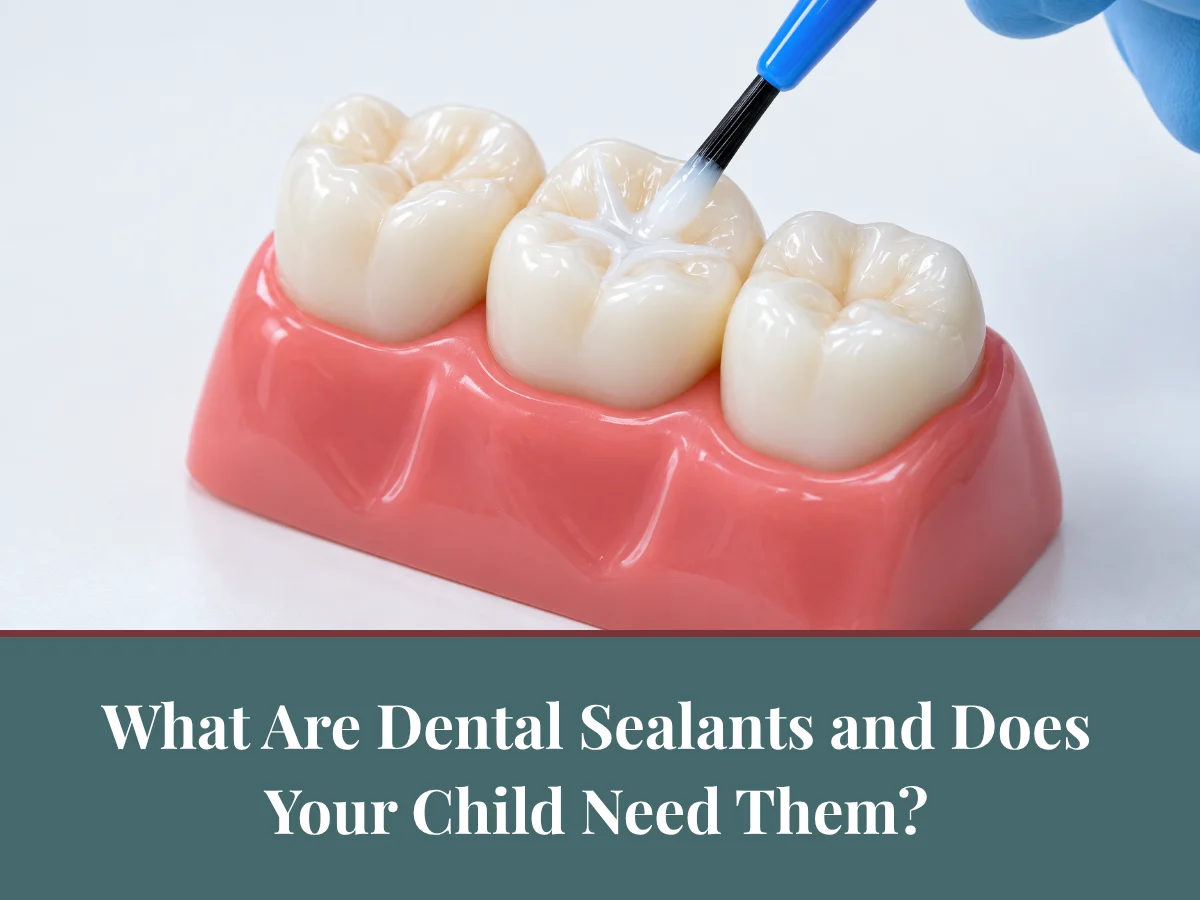
Dental sealants are thin protective coatings applied to the chewing surfaces of the back teeth, especially the molars and premolars.
These teeth naturally contain grooves that help with chewing, but those same grooves can collect plaque and food particles.
Once placed, the sealant creates a smoother surface that helps prevent bacteria and food from settling into these areas.
How Do Dental Sealants Help Prevent Cavities?
Cavities develop when bacteria in dental plaque produce acids that weaken tooth enamel.
The deep grooves in molars can be especially difficult for toothbrush bristles to reach.
Sealants create a physical barrier over these grooves, helping protect the enamel underneath from plaque, food particles, and cavity-causing acids.
They work alongside regular brushing, flossing, professional cleanings, and fluoride—not as a replacement for them.
Which Teeth Usually Need Dental Sealants?
Sealants are most commonly applied to permanent molars.
These back teeth have large chewing surfaces with grooves that are more likely to trap food and bacteria.
Depending on your child’s teeth and cavity risk, a dentist may also recommend sealants for:
- Premolars
- Primary teeth with deep grooves
- Other teeth that are especially vulnerable to decay
Your dentist can determine which teeth would benefit most.
When Should Children Get Dental Sealants?
Children may benefit from sealants soon after their permanent molars erupt.
The first permanent molars often appear around age six, while the second permanent molars commonly erupt around age twelve.
Applying sealants soon after these teeth emerge can help protect them during the years when children may be particularly vulnerable to cavities.
The ideal timing varies, so your dentist will monitor your child’s tooth development during routine visits.
Does Every Child Need Dental Sealants?
Not necessarily.
The need for sealants depends on several factors, including:
- The depth of the grooves in the teeth
- Your child’s history of cavities
- Oral hygiene habits
- Diet
- Overall cavity risk
- Tooth development
Some children are more prone to cavities than others, so your dentist will recommend sealants based on your child’s individual needs.
What Happens During Dental Sealant Placement?
Applying dental sealants is typically quick and noninvasive.
Step 1: Cleaning the Tooth
The tooth is thoroughly cleaned to remove plaque and debris.
Step 2: Preparing the Surface
The tooth surface is prepared so the sealant can bond properly.
Step 3: Applying the Sealant
The liquid sealant material is carefully placed into the grooves of the tooth.
Step 4: Hardening the Sealant
A special curing light may be used to harden the material.
Once complete, the protective coating is ready to help shield the tooth from decay.
Does Getting Dental Sealants Hurt?
No drilling or injections are typically needed to place dental sealants on a healthy tooth.
The procedure is generally painless and can usually be completed in just a few minutes per tooth.
This makes sealants a simple preventive option for many children.
How Long Do Dental Sealants Last?
Dental sealants can protect teeth for several years, although they may gradually wear down with chewing.
During routine dental exams, your dentist can check the condition of existing sealants.
If a sealant becomes worn or damaged, it may be repaired or replaced when appropriate.
Can Children Still Get Cavities With Sealants?
Yes.
Sealants significantly protect the chewing surfaces they cover, but cavities can still develop on other areas of the teeth.
Children still need to:
- Brush twice daily
- Floss every day
- Limit frequent sugary foods and drinks
- Attend regular dental checkups
- Receive professional cleanings
Sealants are one part of a comprehensive cavity-prevention plan.
Are Dental Sealants Only for Children?
No.
Although sealants are most commonly associated with children and teenagers, some adults may also benefit from them.
Adults with deep grooves in cavity-free back teeth may be candidates depending on their dental history and cavity risk.
Your dentist can determine whether sealants are appropriate.
What Are the Benefits of Dental Sealants?
Dental sealants offer several preventive benefits, including:
- Helping protect vulnerable back teeth
- Reducing the risk of cavities in deep grooves
- Providing an additional layer of protection
- Supporting long-term oral health
- Offering a quick and noninvasive preventive treatment
Preventing decay may also reduce the likelihood of needing fillings or more extensive dental treatment later.
How Can Parents Help Prevent Cavities at Home?
Sealants are most effective when combined with good daily habits.
Parents can help children protect their teeth by:
Encouraging Twice-Daily Brushing
Children should brush with fluoride toothpaste using an age-appropriate amount.
Helping With Flossing
Younger children may need help cleaning between their teeth until they develop the coordination to floss effectively on their own.
Limiting Frequent Sugary Snacks
Frequent exposure to sugary foods and beverages can increase cavity risk.
Offering Water
Water can help rinse food particles from the mouth and support healthy saliva production.
Keeping Regular Dental Appointments
Routine exams allow your dentist to monitor tooth development and identify early signs of decay.
Why Choose Smileworld Family Dental for Your Child’s Preventive Care?
At Smileworld Family Dental, we understand that prevention plays an important role in helping children develop healthy smiles.
Our team evaluates each child’s oral health, cavity risk, and tooth development before recommending preventive treatments such as dental sealants.
We also work with parents and children to build healthy oral hygiene habits that support long-term dental wellness.